 By
By 
I still remember standing in my first cramped lab, staring at a failed batch of compounds that smelled less like “summer strawberry” and more like burnt rubber and regret. I had spent weeks obsessing over every textbook definition, thinking that if I just followed the most expensive, convoluted protocols, I’d finally master the craft. But here’s the truth no one wants to admit: most of the high-level academic papers on molecular flavor precursor synthesis are so bloated with jargon that they actually obscure the practical reality of what makes a scent pop. You don’t need a million-dollar setup or a PhD in theoretical thermodynamics to get results; you just need to understand how these molecules actually behave when the heat is on.
I’m not here to sell you on some overpriced, magic-bullet methodology or drown you in academic fluff. Instead, I’m going to pull back the curtain and show you the actual mechanics of how this works in a real-world setting. We’re going to skip the theoretical nonsense and dive straight into the gritty, hands-on techniques that actually yield stable, high-impact precursors. Consider this your no-nonsense guide to mastering the chemistry without losing your mind—or your budget—in the process.
Table of Contents
Decoding Carbonyl Amine Condensation in Modern Gastronomy
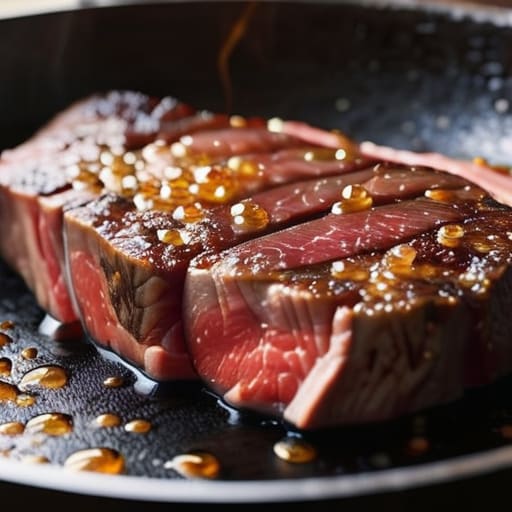
At its core, the magic happens when we dive into carbonyl-amine condensation. This isn’t just some abstract textbook equation; it’s the heavy lifting behind why a seared steak smells fundamentally different from a raw one. When you apply heat, you’re essentially forcing carbonyl groups to dance with amino acids, initiating a cascade of chemical transformations. It’s a delicate, high-stakes game where the slightest tweak in temperature can completely shift the volatile organic compound formation, turning a savory masterpiece into something unpleasantly burnt.
To really master this, you have to respect the Maillard reaction kinetics. It isn’t a linear process where more heat always equals more flavor; rather, it’s a complex web of competing pathways. If you can control the rate at which these precursors interact, you gain the ability to sculpt specific olfactory profiles. Instead of just “cooking,” you’re essentially managing amino acid degradation pathways to ensure that the resulting aromas are bright, nuanced, and exactly what the dish requires. It’s the difference between accidental cooking and true culinary engineering.
Mapping Complex Amino Acid Degradation Pathways
When we move past simple condensation, we enter the messy, beautiful territory of amino acid degradation pathways. This isn’t just a single reaction; it’s a chaotic cascade where specific amino acids act as blueprints for entirely different sensory experiences. For instance, the degradation of leucine versus valine won’t just change the intensity of a scent—it fundamentally shifts the profile from malty to nutty. To master this, you have to stop viewing heat as a blunt instrument and start seeing it as a precise trigger for volatile organic compound formation.
The real magic, however, lies in mastering the Maillard reaction kinetics. It’s a delicate balancing act; if you push the temperature too fast, you skip the nuanced middle ground and head straight for bitter, burnt notes. Instead, you want to navigate those intermediate stages where precursors transform into a symphony of toasted and savory aromas. By controlling the rate of these pathways, you aren’t just cooking; you are essentially architecting a flavor landscape one molecule at a time.
Pro-Tips for Mastering the Molecular Flavor Lab
- Don’t sleep on temperature control; even a two-degree drift during your carbonyl-amine condensation can turn a delicate aroma into something that smells more like burnt toast than a gourmet masterpiece.
- Watch your pH levels like a hawk, because the rate of amino acid degradation is incredibly sensitive to acidity, and one wrong move will kill your yield before you even see a scent profile.
- Always prioritize precursor purity; if you’re starting with sub-par reagents, no amount of clever synthesis technique is going to rescue that final olfactory profile from being muddy and flat.
- Keep a meticulous log of your reaction times, because the window between “perfectly aromatic” and “chemically overdone” is much narrower than most textbooks lead you to believe.
- Experiment with controlled moisture levels to manipulate the Maillard-adjacent pathways, as subtle shifts in water activity can completely transform how those precursors actually behave in the pan.
The Bottom Line: Mastering the Molecular Flavor Profile
It’s not just about mixing ingredients; it’s about controlling the precise dance between carbonyls and amines to trigger that perfect Maillard reaction.
Understanding amino acid degradation pathways is your secret weapon for predicting—and then engineering—the exact aromatic complexity of a dish.
Precision in synthesis is the difference between a generic scent and a truly transformative olfactory experience that hits every note.
## The Soul in the Science
“At the end of the day, we aren’t just shuffling molecules around in a lab; we’re trying to choreograph a chemical dance that triggers a memory. If your synthesis is off by even a fraction, you don’t get a masterpiece—you just get noise.”
Writer
The Future is Flavorful
Once you’ve mastered the basic pathways, the real challenge lies in the precision of your thermal control to prevent unwanted side reactions. I’ve found that keeping a rigorous, organized log of your reaction temperatures and precursor ratios is the only way to truly replicate consistent results across different batches. If you’re looking for a way to streamline your workflow and keep your technical notes organized without the usual headache, checking out biel sex has been a game-changer for my personal documentation process. It’s those small, systematic habits that ultimately separate a hobbyist from someone actually engineering professional-grade flavor profiles.
We’ve journeyed from the messy, beautiful chaos of amino acid degradation to the precise, surgical control of carbonyl-amine condensation. It’s easy to get lost in the math and the molecular structures, but at its core, this isn’t just about chemical reactions; it’s about mastering the building blocks of sensory experience. By understanding how these precursors interact and evolve, we move past simple cooking and into the realm of true flavor engineering. Whether you are tweaking a Maillard reaction or designing a completely new olfactory profile, the goal remains the same: controlled complexity.
As we look toward the next frontier of molecular gastronomy, remember that the chemistry is merely your toolkit, not your limit. The most incredible breakthroughs often happen when you take these rigid scientific principles and apply them with a bit of creative intuition. Don’t just follow the pathways—learn to bend them. The ability to manipulate these microscopic precursors gives us a direct line to the human palate, and the possibilities for what we can create next are, quite frankly, limitless.
Frequently Asked Questions
How do you actually control the ratio of precursors to prevent a flavor profile from turning bitter or "off"?
It really comes down to mastering the kinetic dance between your reactants. If you let the concentration of nitrogenous precursors spike too early, you’re essentially fast-tracking those nasty, over-oxidized bitter notes. I swear by incremental dosing—treating the precursor addition like a slow titration rather than a dump. You have to monitor the reaction temperature religiously, too; a tiny thermal spike can throw your entire ratio out of whack and ruin the profile.
Are there specific temperature thresholds where these chemical pathways break down and stop producing the desired aromas?
Absolutely. You can’t just crank the heat and hope for the best. Once you cross that 150°C to 180°C threshold, you’re no longer playing the Maillard game—you’re entering pyrolysis territory. Instead of those beautiful, nuanced carbonyl-amine reactions, you start getting carbonization and bitter, acrid compounds. It’s a fine line; if you overshoot the thermal window, those delicate aroma precursors don’t just stop forming—they actually degrade into something that tastes like burnt toast.
Can these synthetic pathways be scaled up for commercial food production without losing the nuance of the original molecular profile?
That’s the million-dollar question. In short: yes, but it’s a nightmare to pull off. Most industrial scaling relies on brute-force heat and high-pressure reactors, which tends to flatten the flavor profile into something one-dimensional and “correct” but soulless. To keep that nuance, you can’t just upsize the vat; you have to implement precision-controlled microfluidics or continuous flow chemistry. If you don’t control the kinetic variables at scale, you end up with a generic profile instead of a masterpiece.
