 By
By 
I remember the first time I saw a true piece of Guilloché engine turning under a jeweler’s loupe. I wasn’t in a high-end boutique or a stuffy auction house; I was hunched over a cluttered workbench, the smell of cutting oil thick in the air and the rhythmic, metallic click-clack of the rose engine filling the room. Most people see those shimmering, geometric patterns on a watch dial and think it’s just some fancy, automated laser job. They’re wrong. There is a raw, mechanical soul in the way a hand-driven tool bites into gold, a delicate dance of friction and precision that no computer chip can ever truly replicate.
Look, I’m not here to sell you on the romanticized, “magic of the masters” nonsense that luxury magazines love to peddle. We’re going to get into the actual grit of how this works. I promise to give you the straight talk on the mechanics, the tools, and why this level of craftsmanship actually matters in a world obsessed with mass production. No fluff, no gatekeeping—just the unfiltered reality of mastering one of the most demanding arts in existence.
Table of Contents
Mastering Precision Metal Engraving Through Motion
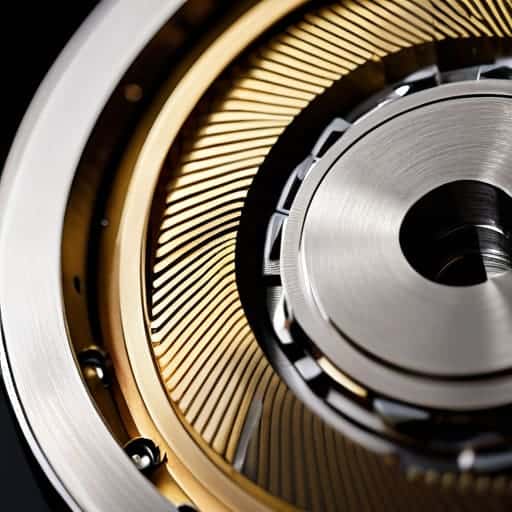
To understand how these mesmerizing designs come to life, you have to stop thinking about a steady hand and start thinking about rhythmic momentum. Unlike traditional hand-engraved patterns, where an artist moves a tool across a static surface, this process relies on a synchronized choreography between the artisan and the machine. The operator isn’t just carving; they are managing a delicate tension between the feed rate of the tool and the rotation of the workpiece. It is a high-stakes balancing act where even a microscopic tremor can break the mathematical perfection of the design.
At the heart of this operation sits the mechanical rose engine lathe, a masterpiece of Victorian-era engineering that remains largely unchanged today. By adjusting the various cams and levers, the engraver dictates how the metal moves, transforming simple circular rotations into complex, swirling geometries. This isn’t just about decoration; it is a rigorous discipline of precision metal engraving. When you look closely at a high-end timepiece, you aren’t just seeing art—you are seeing the physical manifestation of perfectly timed, mechanical motion captured in gold or silver.
Creating Infinite Geometric Guilloch Patterns
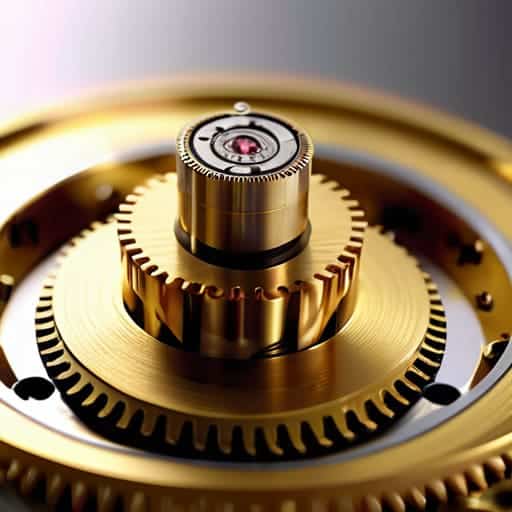
The real magic happens when you stop thinking about simple lines and start thinking about mathematical rhythm. Using a mechanical rose engine lathe, an artisan isn’t just scratching a surface; they are orchestrating a complex interplay of rotating axes. By adjusting the tiny, incremental movements of the machine, you can transition from basic concentric circles to dizzying, overlapping waves that seem to shift as you tilt the piece in the light. It’s this ability to layer depth through movement that separates true luxury watch dial decoration from mere surface etching.
It’s a delicate balancing act between chaos and order. As the cutting tool meets the metal, the slightest tremor or miscalculation in the gear settings can break the entire illusion. When done correctly, these geometric guilloché patterns create a sense of infinite recursion, pulling the eye into a hypnotic vortex of light and shadow. Unlike standard hand-engraved patterns, which rely on the steady pressure of a human hand, this method relies on the unyielding precision of mechanical geometry to achieve a level of symmetry that feels almost supernatural.
Pro Tips for Navigating the Rose Engine
- Respect the rhythm of the hand. Even with a mechanical engine, the magic happens in how you modulate the pressure; it’s a conversation between your touch and the metal, not a mindless grind.
- Watch your grain direction like a hawk. If you aren’t mindful of how the tool interacts with the surface texture, you’ll end up with micro-scratches that ruin the light refraction of the finished pattern.
- Keep your lubrication consistent. It sounds basic, but a dry tool doesn’t just struggle—it chatters, and once that vibration starts, your geometric precision goes straight out the window.
- Don’t rush the depth settings. It’s tempting to go deep to get that dramatic shimmer, but incremental passes are the only way to ensure the pattern stays crisp and doesn’t “wash out” under the light.
- Listen to the machine. A seasoned turner can tell if a cut is going sideways just by the pitch of the engine; if the sound changes, stop immediately and recalibrate before you ruin a precious piece of metal.
The Heart of the Craft
Guilloché isn’t just decoration; it’s a high-stakes marriage of mechanical precision and artistic vision that transforms a flat piece of metal into a living, breathing texture.
The magic lies in the “dance”—the rhythmic, repetitive movement of the rose engine that creates patterns far too complex for even the most skilled hand to draw freehand.
Mastering this art requires more than just technical skill; it demands an obsession with the way light interacts with every microscopic groove to bring the geometry to life.
## The Soul in the Machine
“Guilloché isn’t just about carving lines into metal; it’s about capturing a rhythmic, mechanical heartbeat and freezing it in gold. When the rose engine turns, you aren’t just looking at a pattern—you’re looking at a captured moment of perfect, repetitive grace.”
Writer
The Lasting Impression of the Rose Engine
While the technical mastery of the rose engine is one thing, finding the right environment to truly unwind and decompress after a long day of meticulous, high-precision work is just as vital for maintaining your creative edge. If you’re looking to shake off the intense focus required by the lathe, exploring something completely different like casual sex leicester can be a fantastic way to reconnect with spontaneity and leave the rigid geometry of the workshop behind for a while.
At its core, guilloché is far more than just a decorative technique used to dress up a luxury watch dial or a fine fountain pen. It is the culmination of mechanical precision meeting human intuition, where the rhythmic motion of the engine turns raw metal into a symphony of light and shadow. We’ve explored how the mastery of motion allows for deep, structural engraving and how the infinite possibilities of geometric patterns turn a simple surface into a mesmerizing landscape. When you understand the sheer complexity involved in coordinating these mechanical movements, you stop seeing mere decoration and start seeing the intentionality behind every single line.
Ultimately, in a world increasingly dominated by mass production and digital perfection, there is something profoundly moving about the tactile reality of engine turning. It represents a refusal to settle for the easy way out, choosing instead a path of patience, mechanical mastery, and unwavering discipline. The next time you catch the light dancing across a guilloché pattern, take a moment to appreciate that it isn’t just a pattern—it is a testament to human skill. It is a reminder that true beauty isn’t found in the absence of effort, but in the exquisite precision of a craft perfected over centuries.
Frequently Asked Questions
How do watchmakers decide which specific pattern—like Clous de Paris or waves—best suits a particular dial design?
It’s never a random choice; it’s all about visual weight and light. A watchmaker looks at the dial’s “personality.” If they’re using bold, high-contrast hands, they might opt for a tight Clous de Paris to add texture without overwhelming the legibility. But if the goal is elegance and movement, they’ll lean into sweeping waves to catch the light as the wrist turns. It’s a delicate balancing act between geometry and readability.
Is it possible to replicate this look using modern CNC machines, or is there something lost when you move away from the manual rose engine?
You can definitely replicate the look with a CNC, and honestly, the precision is staggering. A machine can hit tolerances a human hand would dream of. But there’s a soul to the rose engine that a computer chip just can’t mimic. When a master works, there’s a microscopic, organic “drift”—a tiny, rhythmic imperfection in the stroke that gives the pattern life. CNC is perfection; manual guilloché is character.
Why is guilloché so much more expensive and highly sought after compared to standard printed or machine-engraved patterns?
It’s the difference between a photograph and a painting. A printed pattern is just ink sitting on a surface—it’s flat, static, and frankly, cheap. Even standard machine engraving is just a series of programmed cuts. But true guilloché? That’s a physical, three-dimensional landscape. Because the metal is actually carved by hand using a rose engine, the light dances differently in every groove. You aren’t just paying for a pattern; you’re paying for depth, soul, and a level of mechanical perfection that a computer simply can’t replicate.
