By Joseph Goto
As I sat in my workshop, surrounded by the gentle ticking of my upcycled vintage clocks, I stumbled upon an idea that would change the way I thought about our backyard – what if I could create a DIY smart irrigation system that not only preserved the past but also embraced the future? The common myth that building a smart irrigation system has to be a daunting, high-tech task has always frustrated me. In reality, with a little creativity and resourcefulness, anyone can breathe new life into their outdoor space while making it more sustainable.
In this article, I promise to share my personal journey of designing and building a DIY smart irrigation system, highlighting the practical steps and honest advice you need to get started. You’ll learn how to transform your outdoor space into a thriving oasis, using a combination of vintage materials and modern technology. By the end of this guide, you’ll be equipped with the knowledge to create your own unique irrigation system, one that not only saves water but also tells a story of innovative reuse and sustainable living.
Table of Contents
- Guide Overview: What You'll Need
- Step-by-Step Instructions
- Reviving Gardens With Diy Smart Irrigation
- Tinkering with Timeless Wisdom: 5 Essential Tips for Your DIY Smart Irrigation System
- Timeless Takeaways: 3 Key Points to Revive Your Garden
- Nurturing the Future
- Embracing the Harmony of Past and Present in DIY Smart Irrigation
- Frequently Asked Questions
Guide Overview: What You'll Need
Total Time: 4 hours 30 minutes
Estimated Cost: $100 – $200
Difficulty Level: Intermediate
Tools Required
- Drill Press (for making precise holes)
- Jigsaw (for cutting pipes to size)
- Pliers (for gripping and bending wires)
- Multimeter (for testing electrical connections)
- Level (for ensuring proper installation)
- Wire Strippers (for stripping insulation from wires)
- Soldering Iron (for connecting wires)
Supplies & Materials
- Raspberry Pi or similar microcontroller
- Solenoide valves (for controlling water flow)
- Moisture sensors (for detecting soil moisture levels)
- Water pressure sensor (for monitoring system pressure)
- 6 inches of PVC pipe (for connecting valves and sensors)
- 1/2 inch tubing (for connecting sensors to valves)
- Weather-resistant wire (for connecting components outdoors)
- Waterproof connectors (for protecting electrical connections)
- Power supply (for powering the microcontroller and peripherals)
Step-by-Step Instructions
- 1. To begin crafting our DIY smart irrigation system, I start by gathering all the necessary components, including solenoid valves, moisture sensors, and a microcontroller. It’s essential to source materials sustainably, which is why I often scour local thrift stores and salvage yards for parts that can be repurposed, adding a layer of nostalgia to our project.
- 2. Next, I move on to designing the system’s layout, taking into consideration the specific needs of my backyard, including the types of plants, soil conditions, and the overall water conservation strategy. This step involves a lot of sketching and planning, and I always start by jotting down my ideas with my trusty vintage fountain pen, which seems to help me connect with the project on a deeper level.
- 3. With my design in hand, I proceed to set up the microcontroller, which will serve as the brain of our smart irrigation system. This involves writing code that will allow the system to automatically adjust watering schedules based on real-time data from the moisture sensors. It’s a bit like giving our garden its own personal assistant, ensuring it always gets exactly what it needs.
- 4. The installation of the solenoid valves and moisture sensors comes next, requiring careful planning to ensure that each part of the garden is adequately covered. I find that using a combination of traditional gardening techniques and modern technology not only helps in reducing water waste but also adds a unique touch to our smart irrigation system.
- 5. Once all the hardware is in place, I focus on integrating the system with my existing home network, allowing me to monitor and control the irrigation system remotely. This step involves some creative problem-solving, as I need to ensure seamless communication between different devices, but the end result is well worth the effort, providing me with real-time monitoring capabilities.
- 6. To make our DIY smart irrigation system even more efficient, I decide to incorporate weather forecasting data, which helps the system predict and prepare for upcoming weather conditions. This might involve collaborating with local weather services or using online APIs, but the outcome is a system that can proactively manage water usage, making it incredibly resourceful.
- 7. Finally, I test the system, making any necessary adjustments to ensure it’s working as intended. This phase is all about fine-tuning the details, from the sensitivity of the moisture sensors to the timing of the solenoid valves, to create a harmonious and water-efficient ecosystem in my backyard. It’s a moment of truth, where all the planning and hard work come together to breathe new life into my garden.
Reviving Gardens With Diy Smart Irrigation
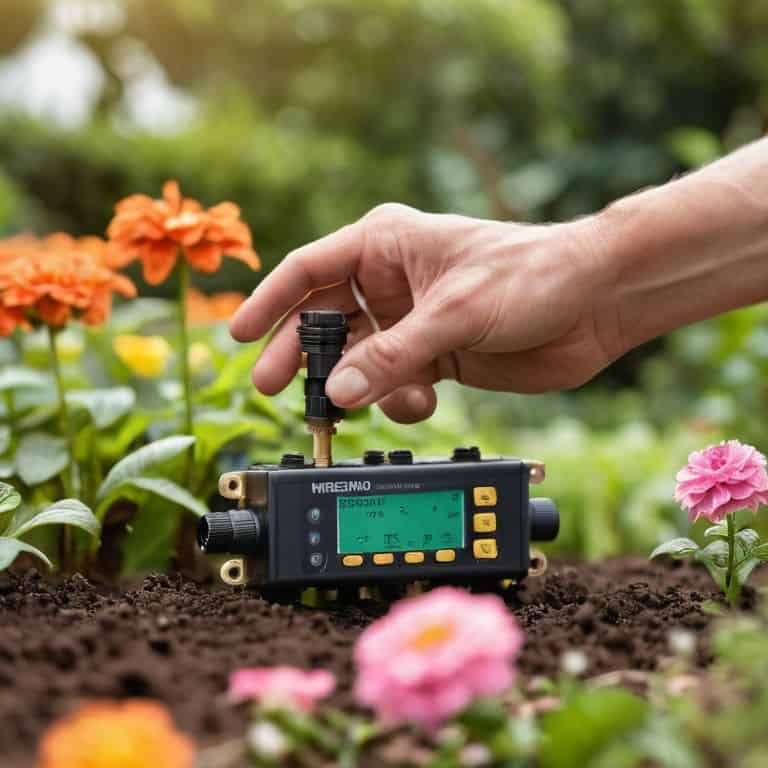
As I delve into the world of wireless soil moisture sensors, I’m reminded of the countless afternoons I spent in my family’s hardware store, watching customers bring in their peculiar gardening problems. It was there that I developed a passion for finding creative solutions, much like the concept of solenoide valve automation, which has revolutionized the way we think about irrigation. By incorporating such technologies into our gardening routines, we can ensure that our plants receive the perfect amount of moisture, thereby reducing waste and promoting healthy growth.
When it comes to implementing a smart irrigation system, weather based irrigation scheduling is a crucial aspect to consider. This approach allows us to tailor our watering schedules to the specific needs of our plants, taking into account factors such as rainfall, temperature, and soil type. By doing so, we can create a more efficient irrigation system that not only saves water but also reduces the risk of overwatering, which can be detrimental to plant health. As someone who enjoys giving old objects new life, I appreciate how this approach can be applied to existing diy drip irrigation kits, breathing new life into our gardening practices.
In my experience, the key to a successful smart irrigation system lies in its ability to balance technology with nature. By embracing the beauty of the natural world and combining it with innovative solutions like raspberry pi irrigation controller, we can create a harmonious relationship between our gardens and the environment. This synergy not only benefits our plants but also contributes to a more sustainable future, where resources are used wisely and waste is minimized. As I sit in my workshop, surrounded by the gentle tick-tock of my upcycled clocks, I’m reminded that even the smallest steps towards sustainability can have a profound impact on our world.
Raspberry Pi Controller Vintage Meets Tech
As I sat amidst the relics of my workshop, surrounded by vintage clock parts and scraps of wood, I pondered the perfect blend of old and new for my DIY smart irrigation system. The Raspberry Pi, with its compact size and versatility, became the obvious choice for the controller. I envisioned it nestled within a beautifully crafted wooden enclosure, adorned with intricate carvings that echoed the patterns found on my grandmother’s antique furniture.
With my vintage fountain pen, I began sketching the design, merging the elegance of a bygone era with the cutting-edge technology of the Raspberry Pi. The result would be a unique timepiece-inspired controller, where gears and dials converged with circuits and wires, telling a story of innovation and nostalgia. This harmonious union of past and present would not only oversee the irrigation system but also serve as a testament to the beauty of upcycling and creative problem-solving.
Unlocking Wireless Soil Moisture Secrets
As I delved deeper into the world of smart irrigation, I became fascinated with the concept of wireless soil moisture sensing. It’s amazing how a small, unassuming device can unlock the secrets of our garden’s hidden world. By integrating these sensors into my DIY system, I’ve been able to tailor my watering schedule to the exact needs of my plants, reducing waste and nurturing growth. The data from these sensors has become a treasure trove of insights, allowing me to refine my approach and coax even the most reluctant blooms into vibrant life.
With each new discovery, I feel like I’m uncovering a piece of a larger puzzle, one that reveals the intricate dance between soil, water, and roots. It’s a truly magical process, and one that I’m eager to continue exploring.
Tinkering with Timeless Wisdom: 5 Essential Tips for Your DIY Smart Irrigation System
- Start by repurposing old materials, like my grandfather’s vintage water cans, to create a unique and eco-friendly irrigation system that tells a story of its own
- Combine traditional gardening techniques with modern smart sensors to ensure your plants receive the perfect amount of water, just like my grandmother used to do, but with a tech-savvy twist
- Experiment with solar-powered pumps and recycled plastic pipes to minimize your system’s carbon footprint and give old items a new lease on life
- Program your Raspberry Pi controller with a dash of nostalgia, incorporating vintage-inspired interfaces or sounds to make your smart irrigation system a true reflection of your personality
- Remember, the beauty of DIY lies in its imperfections, so don’t be afraid to get creative and make mistakes – they’re all part of the story your smart irrigation system will tell, and the memories you’ll make along the way
Timeless Takeaways: 3 Key Points to Revive Your Garden
As I reflect on our DIY smart irrigation journey, I realize that the true magic lies not just in the technology, but in how it harmoniously merges with nature, much like the intricate mechanisms of my upcycled vintage clocks
By embracing the union of vintage charm and modern tech, as seen in our Raspberry Pi controller, we can unlock a world of innovative possibilities that not only preserve the essence of the past but also inspire a more sustainable future
Ultimately, the story of our DIY smart irrigation system serves as a testament to the transformative power of creativity and resourcefulness, reminding us that even the most forgotten spaces can be breathed back to life with a dash of imagination and a willingness to tinker
Nurturing the Future
As we weave technology into the fabric of our gardens, a DIY smart irrigation system becomes more than just a tool – it’s a testament to our ability to harmonize innovation with the natural world, and to preserve the stories of our past while nurturing the promise of tomorrow.
Joseph Goto
Embracing the Harmony of Past and Present in DIY Smart Irrigation
As I reflect on our journey to create a DIY smart irrigation system, I am reminded of the beauty of transformation that occurs when we combine vintage elements with modern technology. From the initial concept to the final implementation, this project has been about more than just optimizing water usage; it’s been about breathing new life into forgotten spaces and unlocking the secrets of wireless soil moisture sensing. The incorporation of a Raspberry Pi controller, with its blend of vintage meets tech, has not only enhanced the system’s efficiency but also served as a poignant reminder of the narrative of nostalgia that underpins my approach to DIY projects.
Our DIY smart irrigation system stands as a testament to the power of creative repurposing and the endless possibilities that emerge when we dare to imagine a different story for the relics of the past. As you embark on your own DIY adventures, remember that the true magic lies not in the destination, but in the journey of discovery. It is in the sketches with a vintage fountain pen, the late nights in the workshop, and the moments of serendipitous innovation that we find the essence of our craft. So, let us continue to weave tales of transformation, one DIY project at a time, and inspire others to see the world through the lens of imagination and resourcefulness.
Frequently Asked Questions
How can I integrate my DIY smart irrigation system with other vintage gardening tools to create a cohesive and nostalgic outdoor space?
As I ponder integrating my DIY smart irrigation system with vintage gardening tools, I envision a harmonious blend of old and new. I’d recommend incorporating antique watering cans, distressed wooden planters, and classic gardening gloves to create a nostalgic ambiance, while my upcycled clock-planter, powered by the Raspberry Pi controller, serves as a charming centerpiece.
What are some creative ways to repurpose old materials, like wooden crates or metal pipes, to build a unique and eco-friendly smart irrigation system?
I love repurposing old treasures to breathe new life into my DIY projects. For a smart irrigation system, consider transforming wooden crates into planters or using metal pipes as a trellis system. You can also upcycle vintage faucets as water features or utilize reclaimed wood to create a unique controller housing, blending the old with the new in a beautiful dance of sustainability and innovation.
Can I use a vintage clock mechanism as a timer for my DIY smart irrigation system, and if so, how would I incorporate it into the overall design?
As I pondered the union of past and present, I realized a vintage clock mechanism could beautifully serve as a timer for my DIY smart irrigation system. I’d carefully disassemble the clock, integrating its mechanical heartbeat into the Raspberry Pi controller, allowing the system to water our garden in harmony with the rhythm of yesterday’s timekeeping.