By Joseph Goto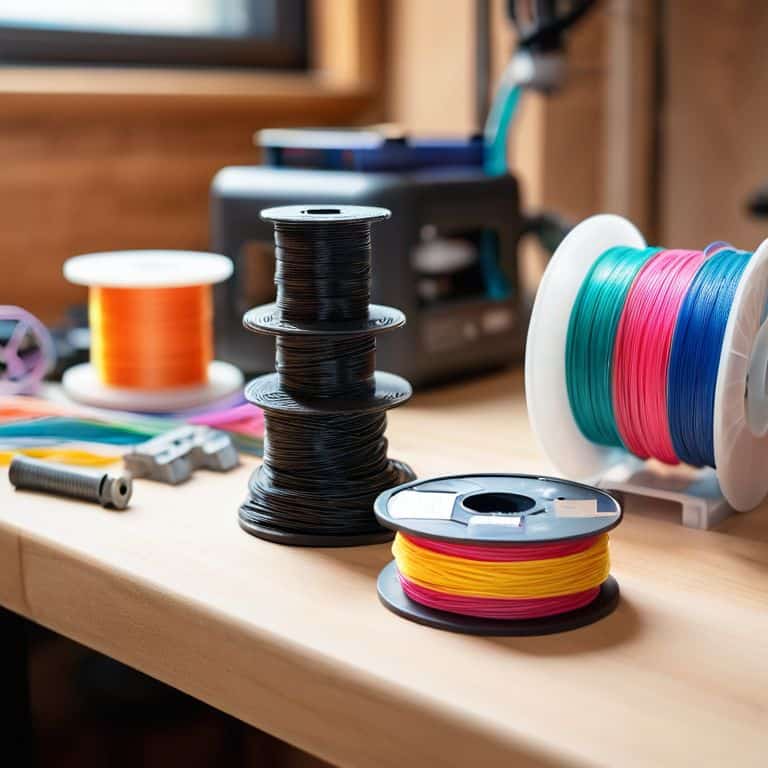
As I sit amidst the whirring of my 3D printer, surrounded by spools of 3D printing filament, I’m reminded of the countless hours I spent watching my grandmother bring new life to discarded materials. This fascination with transformation is what drew me to the world of 3D printing, and more specifically, to creating a comprehensive 3D printing filament guide. I’ve seen many enthusiasts struggle to navigate the complexities of filament selection, and I believe it’s time to set the record straight: choosing the right filament isn’t about following a one-size-fits-all approach, but rather about understanding the unique characteristics of each material.
In this article, I promise to share my honest, no-nonsense advice on how to select the perfect filament for your projects. I’ll take you through the process of understanding the different types of filaments, their applications, and the factors to consider when making your selection. Whether you’re a beginner or an experienced maker, this 3D printing filament guide is designed to provide you with the practical knowledge you need to bring your ideas to life. By the end of this guide, you’ll be equipped with the confidence to experiment with various filaments and push the boundaries of what’s possible with 3D printing.
Table of Contents
Guide Overview: What You'll Need
Total Time: 1 hour 30 minutes
Estimated Cost: $20 – $100
Difficulty Level: Intermediate
Tools Required
- Calipers (for measuring filament diameter)
- Filament scale (for weighing filament)
- 3D printer (with compatible filament extruder)
- Utility knife (with extra blades for cutting filament)
- Pliers (for handling small filament pieces)
- Ruler (for measuring 6 inches of filament for testing)
Supplies & Materials
- 3D printing filament (various colors and types)
- Filament storage container (for keeping filament dry and organized)
- Desiccant packets (for maintaining a dry environment)
- Filament guide tube (for directing filament to the extruder)
- Cable ties (for managing filament and printer cables)
Step-by-Step Instructions
- 1. To begin our journey into the world of 3D printing filaments, start by gathering your materials, which should include a 3D printer, a spool of your chosen filament, and a computer with the necessary software installed. It’s essential to familiarize yourself with your 3D printer’s specifications to ensure compatibility with the filament you’ve selected.
- 2. Next, prepare your workspace by clearing any clutter and ensuring good ventilation. This step is often overlooked but is crucial for maintaining a safe and efficient working environment. Remember to handle the filament with care, as it can be sensitive to moisture and extreme temperatures.
- 3. Now, load the filament into your 3D printer, following the manufacturer’s instructions for the specific model you’re using. This process typically involves feeding the filament into the extruder and heating it up to the optimal temperature for the type of filament you’re working with. It’s vital to monitor the temperature settings closely to avoid overheating or underheating, which can affect the print quality.
- 4. With the filament loaded, configure your print settings using the software provided with your 3D printer. This includes selecting the appropriate layer height, infill density, and print speed, which will depend on the desired outcome of your project. Experimenting with different settings can help you achieve the perfect balance between print time and quality.
- 5. Once you’ve configured your settings, initiate the printing process and let the machine do its magic. It’s always exciting to see your design come to life, layer by layer. During this time, keep an eye on the print’s progress, as you may need to make adjustments on the fly to prevent issues like warping or stringing.
- 6. As the print nears completion, prepare for post-processing, which may include removing support material, sanding, or applying a finish. This step is where you can add a personal touch to your project, making it truly unique. Pay attention to detail during post-processing, as it can make a significant difference in the final appearance of your printed item.
- 7. Finally, inspect your finished product and admire the fruits of your labor. This is the moment when all your hard work and patience pay off, and you get to see your vision transformed into a tangible object. Remember to document your process and results, as reflecting on your experiences can help you refine your skills and inspire new projects in the future.
3d Printing Filament Guide
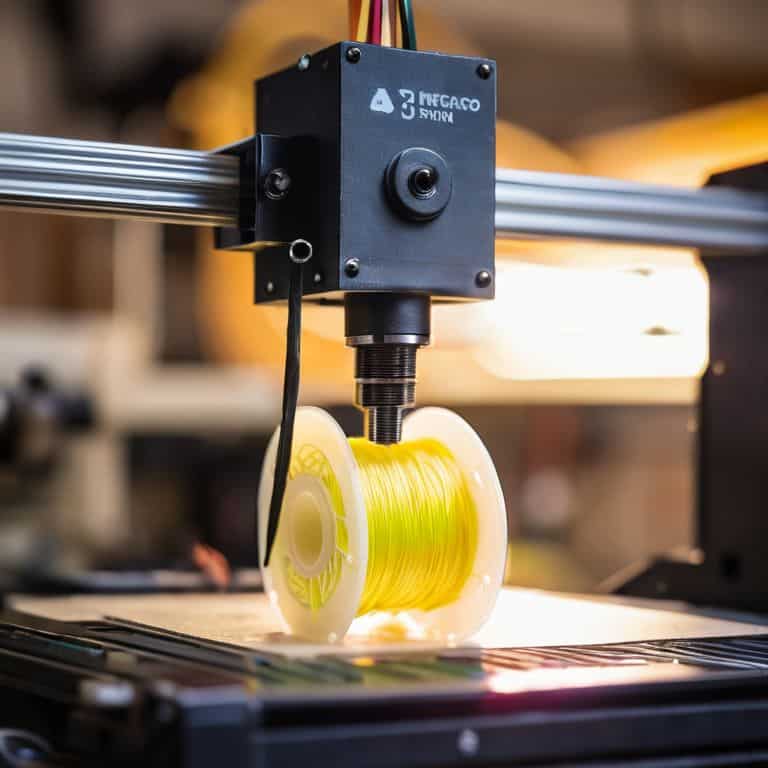
As I delve into the world of 3D printing, I’m reminded of my grandmother’s words: “The right materials can make all the difference in bringing a project to life.” When working with fused deposition modeling materials, it’s essential to consider the specific characteristics of each type. For instance, 3D printing plastic types like PLA and ABS have distinct properties that affect the final product. Understanding these nuances can help you achieve the desired outcome.
In my experience, filament diameter accuracy plays a crucial role in ensuring consistent prints. A slight variation in diameter can affect the overall quality of the print, making it essential to choose a high-quality filament. I’ve found that printing with PETG filament can be particularly rewarding, as it offers a great balance between flexibility and durability. By experimenting with different materials and techniques, you can unlock new possibilities for your 3D printing projects.
When it comes to optimizing your prints, temperature control is vital. Finding the best temperature for PLA filament can make all the difference in achieving a smooth, even print. I’ve also noticed that ABS vs PETG durability is an important consideration, especially when creating functional items. By carefully selecting your materials and adjusting your printing settings, you can create durable, long-lasting products that showcase the full potential of 3D printing.
Beyond Abs vs Petg Durability
As I delve into the world of 3D printing filaments, I find myself drawn to the nuances of material durability. The age-old debate of ABS vs PETG is just the beginning – there’s a rich tapestry of characteristics to explore. I recall my grandmother’s wise words: “The true test of an object’s worth lies not in its initial form, but in its ability to endure.” This mantra resonates deeply as I experiment with various filaments, seeking to push the boundaries of what’s possible.
In my workshop, I’ve come to appreciate the unique strengths of each material. ABS, with its impact resistance, and PETG, with its chemical resistance, both have their place in the world of 3D printing. Yet, it’s the lesser-known filaments – like PLA and Nylon – that truly spark my imagination. Their distinct properties, when harnessed correctly, can yield creations that are not only durable but also tell a story of their own, much like the vintage clocks I love to upcycle.
Unraveling Fused Deposition Modeling
As I delve into the world of Fused Deposition Modeling, I’m reminded of the intricate clockwork mechanisms I’ve had the pleasure of upcycling. The layer-by-layer construction process echoes the meticulous craftsmanship of traditional clockmaking, where each component is carefully considered to create a harmonious whole. This parallel sparks my imagination, and I begin to see the potential for storytelling in every 3D printed object.
With my vintage fountain pen in hand, I sketch out ideas for innovative FDM projects, inspired by the relics of yesterday. The fusion of old and new is a recurring theme in my work, and I find that FDM’s versatility allows me to push the boundaries of what’s possible. By experimenting with different filaments and techniques, I aim to create pieces that not only showcase the beauty of 3D printing but also pay homage to the craftsmanship of the past.
Weaving Timeless Tales: 5 Essential Tips for Your 3D Printing Filament Journey
- As I sit amidst my collection of vintage clocks, now reborn as unconventional timepieces, I’m reminded that the art of 3D printing is not unlike the precise dance of clockwork mechanisms – both require patience, a keen eye for detail, and a deep understanding of the materials that bring them to life.
- With my trusty vintage fountain pen in hand, I’ve outlined the importance of selecting the right filament for your project, much like choosing the perfect gear for a timepiece: it’s all about harmony and function.
- In the spirit of upcycling and giving old materials new life, consider experimenting with recycled filaments – not only do they reduce waste, but they also add a unique layer of storytelling to your creations, much like the character lines on a well-loved, antique clock.
- Much like the intricate mechanisms of my beloved clocks, the temperature and speed settings of your 3D printer are crucial – a slight miscalculation can throw off the entire rhythm of your print, so take the time to calibrate and adjust with the precision of a clockmaker.
- Lastly, don’t be afraid to blend the old with the new; combine traditional craftsmanship with the cutting-edge technology of 3D printing to create pieces that are not only functional but also tell a story of innovation and nostalgia, much like my own timepieces that marry the past with the present.
Timeless Tales of Transformation: 3 Key Takeaways
As I reflect on my journey through the world of 3D printing filaments, I’m reminded that the true beauty lies not in the technology itself, but in the stories of rebirth and renewal it enables – a testament to the power of human ingenuity and creativity
The choice between ABS and PETG is not just about durability, but about the narrative you want your project to tell: one of rugged resilience or of flexible adaptability, each with its own unique charm and character, waiting to be unleashed by the imaginative tinkerer
Beyond the technicalities of fused deposition modeling and filament types, the real magic happens when we allow ourselves to be inspired by the relics of yesterday, embracing the quirks and imperfections that make each creation a one-of-a-kind masterpiece, a bridge between the past and the present, crafted with love, care, and a deep appreciation for the stories that make us who we are
Timeless Creations
As I weave together the threads of innovation and nostalgia, I’ve come to realize that a 3D printing filament guide is not just a technical manual, but a key to unlocking the stories hidden within the layers of our creations, where the past and present converge in a beautiful dance of transformation.
Joseph Goto
Weaving the Threads of Innovation
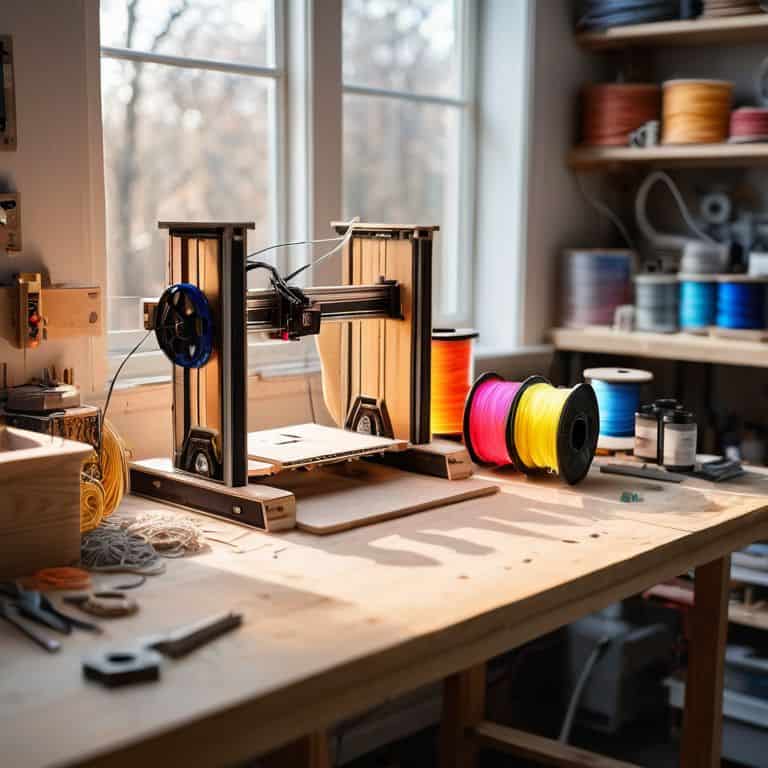
As I reflect on our journey through the fascinating world of 3D printing filaments, I’m reminded of the endless possibilities that arise when we combine traditional craftsmanship with modern technology. From the nuances of Fused Deposition Modeling to the durability debates between ABS and PETG, we’ve unraveled the complexities of this innovative field. By embracing the art of transformation, we’ve discovered how to breathe new life into discarded materials, giving them a second chance to tell their story. Whether you’re a seasoned maker or an enthusiastic beginner, the key takeaways from this guide are designed to empower your creative endeavors, inspiring you to push the boundaries of what’s possible with 3D printing filaments.
As we conclude this curated guide, I invite you to step back, gaze upon your latest creation, and appreciate the beauty of rebirth that 3D printing filaments have made possible. Remember, the true magic lies not in the technology itself, but in the stories we tell through the objects we craft. As you continue to explore the frontiers of 3D printing, I encourage you to stay curious, keep experimenting, and always seek to infuse your creations with a sense of history and wonder. For in the end, it’s not just about printing objects – it’s about weaving the threads of innovation, tradition, and imagination into a rich tapestry that inspires and delights us all.
Frequently Asked Questions
What are the most essential factors to consider when selecting a 3D printing filament for a specific project?
When choosing a 3D printing filament, I consider the project’s intended use, desired texture, and environmental factors. Durability, flexibility, and thermal resistance are key factors – for instance, ABS is great for outdoor items, while PETG excels indoors. I also think about the story I want the material to tell, and how its unique character will enhance my design.
How do different environmental conditions, such as temperature and humidity, affect the quality and durability of 3D printed objects using various filaments?
As I tinker with my upcycled clock creations, I’ve noticed how environmental conditions can significantly impact 3D printed objects. Temperature and humidity fluctuations can cause warping, brittleness, or layer separation in certain filaments, like ABS or PLA, while others, such as PETG or nylon, prove more resilient.
Can you provide examples of innovative projects that have successfully utilized unusual or exotic 3D printing filaments to create unique and functional items?
I recall a project where I used a metallic-infused filament to craft a vintage-inspired clock, its gears and mechanisms a testament to the beauty of blending past and present. Another favorite is a friend’s use of glow-in-the-dark filament to create a constellation map, bringing the night sky into their living room.